AI & Me

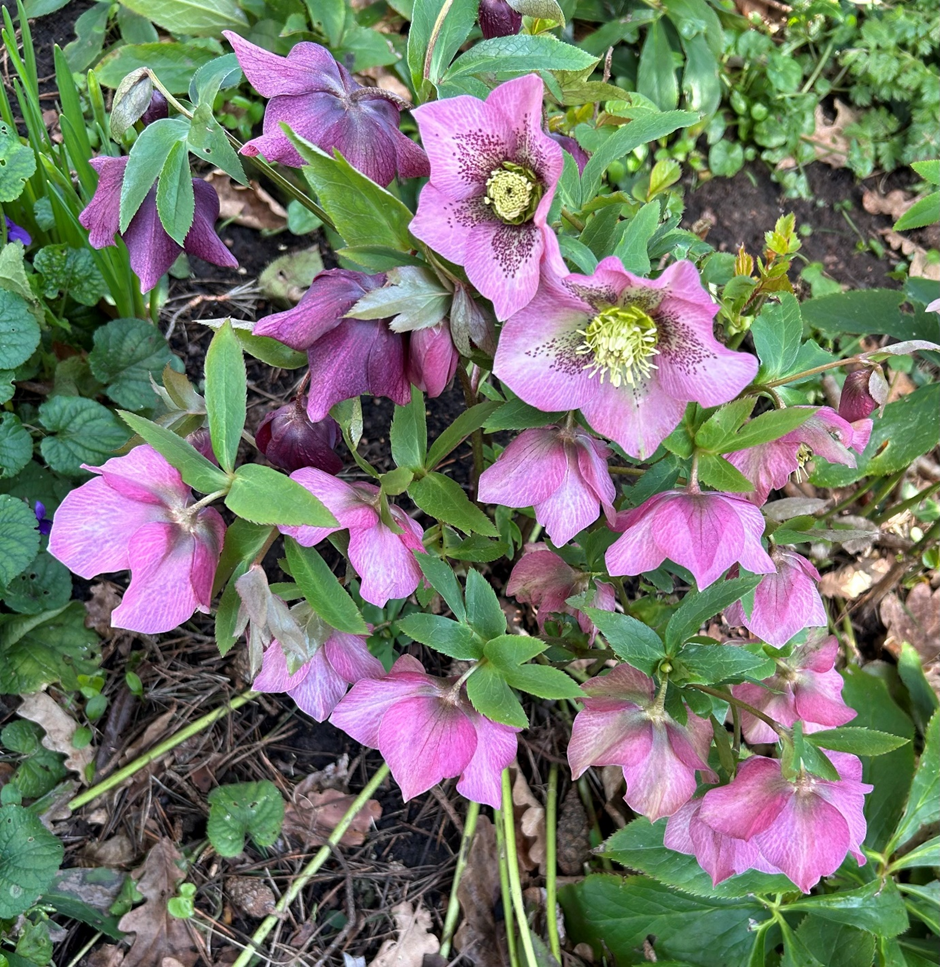
Helleborus Orientalis – associated with serenity, peace and tranquillity

AI is omnipresent. A quick early morning check shows my inbox is full of AI articles, newsflashes and invitations to webinars. Driving to the gym, the business news explores International responses to Agentic AI. Waiting to be let in, I read that according to Stanford Professor Erik Brynjolfsson speaking at the World Economic Forum, ‘We are not investing enough in understanding the societal implications of AI.’

A welcome chance to dream and reflect as I swim 2K with ear plugs and goggles.

Back in the changing room, the heated conversation outside my cubicle is about AI challenges in two workplaces.

Back in the office, a few thoughts as we rapidly approach Spring:

Headlines say that AI has the potential to make time for humans to dream and create, using their inherent strengths while machines do what they are better at.

Our attitude to technology often depends on our digital maturity, age and ‘real’ experience. Where do you sit:

Early adopters are evangelists for AI potential. They are true innovators, enthusiastic advocates and impulsive experimenters.

Fast followers are keen to take calculated risks. They are horizon scanners, curious creators and hopeful travellers.

The crowd wait to see and will follow later. They are evidence seekers, reflective thinkers and will join in when shown concrete proof of value delivered.  

Left behind, the sceptical, uninformed and unwilling to adopt will never venture down the path of AI willingly. The World is increasingly designed to neglect them.

Advisors say we need AI strategies to suit individuals and organisations.  Most agree that we should research widely, try our chosen AI safely and review the return on our investment. This involves identifying something which will not significantly impact other activities or functions and is discrete with easy to manage boundaries. We then need to decide what ‘real’ value we expect AI to deliver, determine the support we need and set metrics to assess whether ‘real’ value has been realised. Now we are ready to try out our chosen AI, safely

My AI:Me hack

What habit do I want to develop, reinforce or break using AI?

What support do I need?

How/can I protect my own IP and brand?

What will I stop doing to make time and maintain this investment?

What will make me exit?
Autumn Brings…

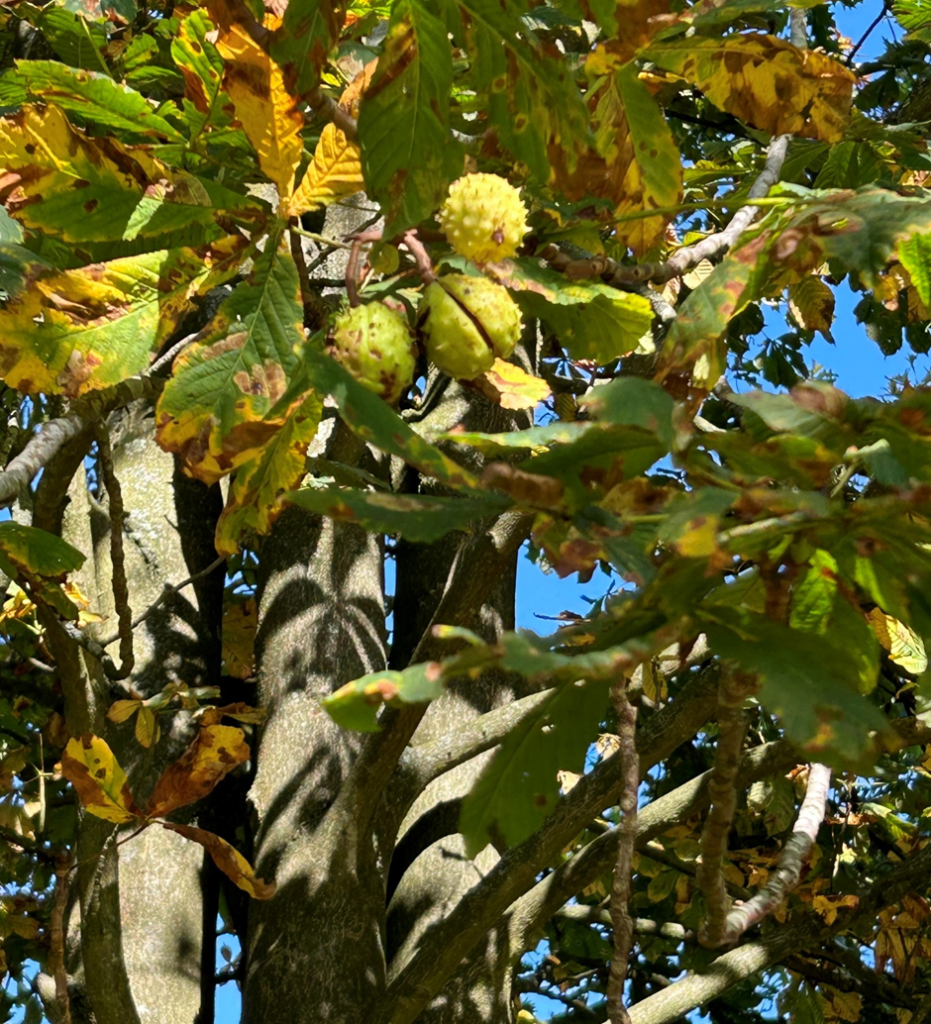
In UK, Autumn brings a new academic year for schools, colleges and universities. Transitions for many children and young people arriving in new places, meeting new people and navigating new situations. Not to forget their parents and families adjusting to new routines.

Autumn also brings party conference season for politicians, providing a feast for the media and a search for policy aspirations among the rhetoric.

Autumn is a time for businesses to take stock, often at strategy events. For industry sectors, this is the season for conferences and awards ceremonies. Opportunities to gather with colleagues and connections.

And for many individuals, this is a time to plan renewal and transitions. An effective starting point can be reaching out to your network and making time for conversations; re-connecting with those you have lost touch with; identifying communities you would like to participate in.

In a busy, noisy World it is easy to neglect the human interactions that enable us to be the best we can. From planned and ad hoc chats come insights and opportunities that may be missed by a sole traveller.

Which Gear?

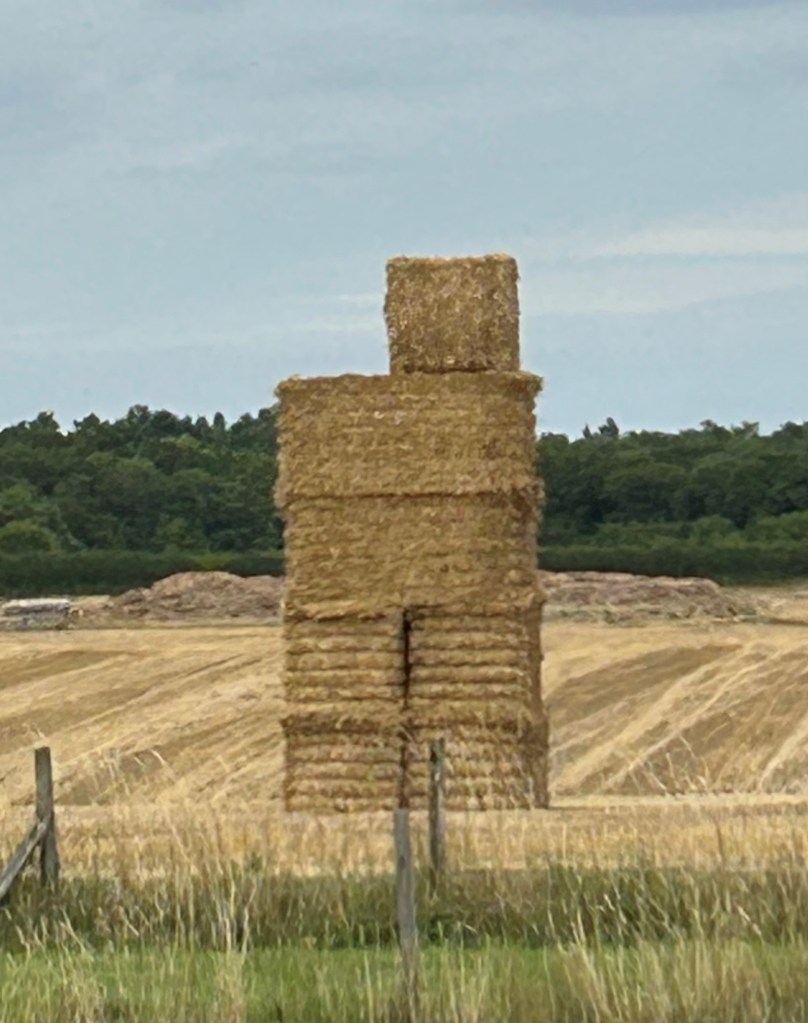
Autumn is almost here. The combine has been busy into the small hours. The crop has been gathered in and the field is being prepared for the next sewing. So while watching the Olympics and checking the harvest of medals for countries, sports and individuals, a few insights resonate. They can be applied to business and life in general:

We live in a busy and highly competitive World. The pressure to perform in fifth or sixth gear ALL THE TIME seems to be universal. Sometimes driven by self and at other times by the perception that others expect us to demonstrate our capability.

But full on all the time isn’t real or achievable. Continuous top gear burns out people and machines.

We need to maintain and sustain our motors so that when we need to perform in top gear, we are in the best possible condition. This is true for people and machines. The solution may involve developing new strengths or releasing potential.

In a spectacular race against stiff competition, Noah Lyles won a gold medal and became the fastest man on Earth in the men’s 100 meter final on Sunday.  Apparently he has been working on raising then calming his level of adrenalin before entering the blocks.

Swedish Pole Vaulter -Armand (Mondo) Duplantis provided a masterclass in the Olympic slogan ‘faster, higher, stronger’ with his higher and higher vaults, powered by an inner confidence and calm. The new World Record is 6.25 meters.

Keely Hodgkinson also demonstrated that same inner confidence and calm as she secured the Women’s 800 meter Gold medal .The third GB athlete to do so, 60 years after Ann Packer and 20 years after Dame Kelly Holmes.

Quiet moments of calm and reflection recharge our batteries and allow us space and time to be and to think before we focus on our performance and our prize.

Many alternative therapies designed to create healthy bodies and minds are based on a foundation of ‘rest before exertion.’ Each therapy has advocates. Some have a recognised body of research evidence.

Building a schedule which recognises which gear you expect to be in, creates realistic diaries. If you can link your gear requirements to your body clock, greater success can be achieved.

Surrounding yourself with the right support network clearly helps you find the right gear. As medalist after medalist thank their coaching team, family and wider supporters, their gratitude is engaging.

In the Velodrome, we watched the cohesive GB women’s cycling sprint team win Gold. Their story highlighted that each team member bought specific strengths and knew the strengths of their colleagues. They trusted each other. And before getting on the track, they spent time in the ‘quiet’ zone.

A last compelling message from Olympics 2024:

It’s not about producing a perfect performance. It’s about how quickly you recover from your mistakes.

So learning to anticipate and change gears smoothly is a strength to develop.

Spring ‘Tonic’

Spring ‘Tonic’

The prevailing condition for many leaders is fatigue, overload and energy loss. Individuals are required to be resilient and persist against all odds.

Articles proliferate with advice on prioritising rest and ‘playtime’. There are no universal solutions. We each bring unique strengths and perceptions to the situations we face, so a personalised approach to finding our tonic(s) is essential.

For the musically inclined, Tonic is the first note of a scale and is most important because it serves as the focus for melody and harmony.

So what is the first note of your sound track? What signal does it send? What lifts your spirits and makes your feet dance?

In my search for music to feed my spirits I look for artists and gigs in smaller venues. Over the last few months, serendipity has led to the happy discovery of talented performers from around the World. Recent advice has come from many sources including the curious taxi driver taking us to a recent gig and sharing the long and impressive list of musicians he has seen this year.

For the active, Tonics are ‘the activities which invigorate and sustain us.’

The current focus on health and well-being practices provides an extensive list of alternatives. Choosing wisely and developing sustainable habits takes effort.

For decades I have protected time for swimming. Involving very early starts, the habit provides both exercise and a precious opportunity to reflect. Colleagues and friends have chosen walking, cycling, yoga and running. On Sunday, London will celebrate the 2024 Marathon attracting entrants of all ages running for multiple causes. We  will be there cheering their efforts. A tonic for all supporters and participants.

For the epicureans, ‘eat, drink and be merry for tomorrow we die.’ is an appealing philosophy. Tonics are the ‘medicinal’ substances which lift our spirits. Tonics are  restorative, reviving, stimulating or invigorating,

In these health conscious times, ginger shots and electrolyte tablets seem to be a popular alternative to cake and wine. Make wise choices seems to be good advice.  

And for all of us as we seek tonics to provide harmony for our body, mind and spirit, what about:

The tonic of laughter?

Being part of a community?

The company of friends?

Stimulating and rewarding ‘work’?

As we spring into Spring, let’s all make time to find our own tonic(s).

For the curious, the tulips include Happy Feet from https://blomsbulbs.com/

Curiosity and Perseverance

While clearing winter flower beds and trying to identify bulbs, serendipity found me listening to a radio broadcast by the Astronomer Royal, Lord (Martin) Rees. He was discussing NASA’s mission to Mars and describing the robots sent to gather scientific data on the surface of the red planet. The first, sent in 2011 was named Curiosity. It moved across Gale crater and Mount Sharp slowly in one direction. A successor named Perseverance was sent in 2220 and was designed to move around objects. 

Curiosity and Perseverance are two of the perennially cited strengths required for organisation and leadership success and certainly for gardeners.

Curiosity

Natural curiosity is the behaviour we admire in children and often blame external factors for limiting in ourselves. Perhaps we should ask ourselves if we are self- limiting our natural curiosity? 

To develop an organisation’s curious mind takes effort and active leadership. Capturing the imagination and energy of all by role modelling curiosity in action, encouraging and enabling the behaviour in others. In organisations with high levels of trust, individuals may have greater confidence to explore and an inclination to share discoveries with colleagues. 

Curiosity needs to be sustained in times of great uncertainty. Defined as ‘a strong desire to know or learn something’ the concept of curiosity is central to motivation. Strengths Profile assesses the extent to which you are ‘interested in everything, constantly seeking out new information and learning more.’

Perseverance

There are several aspects to perseverance. The current focus on individual and organisational resilience is just one. Resilience is the strength to take hardships and setbacks in your stride, recovering quickly from adversity. A second aspect is the strength to persist, to achieve success by keeping going when confronting difficulties. And finally, we see examples of individuals and organisations who use adversity to spur them on to greater efforts and achievements. They bounce back from setbacks.

Health check: 

  • Where do you look for new ideas?
  • How do you reflect on and apply new thinking? 
  • How do you acknowledge and share your discoveries? 
  • What and who helps you to keep going when you face challenges? 
  • How do you overcome setbacks? 
  • How do you use setbacks to spur you on?
  • What can you do now to nurture the enablers of curiosity and perseverence? 
  • What new habit would you like to develop? 

And for the curious gardeners, I have persevered and finally  found my garden planting plans. These tiny green shoots are snowdrops, transplanted last year to form new clumps.

Sources:

Curiosity

Resilience

https://www.weforum.org/agenda/2024/01/global-risks-2024-business-resilience-in-an-era-of-risk-turbulence/

https://www.weforum.org/agenda/2024/01/building-resilient-tomorrow-concrete-actions-global-leaders/