The price of agility

According to thought leader Dr Laurence Lyons:

‘The price of agility is under-utilisation.’

Agile – Alert – Nimble – Sprightly, highly desirable characteristics. Being agile is the aspirational goal of most business leaders, but it comes at a cost.  

How do you resource the need to deliver value to your existing customers with the need to be continuously curious and quick to spot opportunities.

‘How do you factor in the fat which makes you fit?’

Who keeps the wheels on the car? How do you ensure that the business as usual team don’t feel under valued as the development team are commissioned to seek new and novel solutions?

How do you ensure that insights from the people working with your customers reach strategic thinkers and inform their decision making?

How do you create a culture where reflection time is valued, where the time and inclination to innovate are actively encouraged?

And how do you achieve all the above if the message you send is ‘do more with less?’

Sentiment

In difficult trading times we are advised to track both the tangible and intangible aspects of our businesses. In tangible terms, a real understanding of money flows is essential. In intangible terms, we follow sentiment. What is the quality of our relationships along our value chains? Are we delivering value to all our stakeholders? Do they want to travel further with us?

Sentiment is viral. It spreads quickly across boundaries. Sentiment impacts our reputation and bottom line. Sentiment is often driven by interest not logic. Sentiment is not static.

How much time is your business devoting to tracking and analysing the impact of stakeholder sentiment on the formulation and delivery of your strategy?

Who is bringing insights on stakeholder sentiment for debate in the boardroom?

Are the messages being filtered or distorted?

Which image do you see?

How to crack the toughest leadership challenge of all

Successful leaders agree that while formulating strategy may be difficult, ‘making strategy happen’ is the greatest challenge. Since the 1990s, the author and Dr Laurence Lyons have been collaborating to research and develop approaches to building the leadership capability necessary to address this challenge successfully.

As highly experienced agents of change, LyonsBateson have captured important insights into the development of Situational IntelligenceTM  through their work with multiple organisations and their leaders. Based on the premise that for any event, there are a number of potential outcomes and some of these outcomes may be more desirable that others, the leader seeks to judge the most effective way to intervene in order to bring about the most desirable outcome.

By identifying the event as a situation arising from the translation of a policy into action, the leader seeks to define the potentially impacted stakeholders, establish their motivations and engage the stakeholders in building a common agenda.  Building capability involves practice with a toolkit of critical questions which enable business leaders to reflect on and make sense of the complexity surrounding them.

Download Lyons-Bateson SIT Summit Paper

Blind process

WARNING – BLIND PROCESS KILLS RELATIONSHIPS

The Board as navigator:

Boards are responsible for creating systemic change and directing the alignment of effort (capability + will) to achieve defined strategies. Boards make choices during the business year and lead the implementation of those choices by creating communities of common interest.

But the World in which Boards navigate their organisations is turbulent and ambiguous; the business models they develop are increasingly complex and involve multiple, ‘non owned’ players in the value chains.

The solution is to build flexible business models, able to respond quickly to the continually shifting business environment and avoid the dissipation of effort and resultant destruction of value. This involves avoiding blind process and encouraging innovation.

Blind process is the result of regulating for every eventuality:

The message is not new. Aristotle (384 – 322 BC) wrote ‘Law is mind without reason.’ In the 1700s Adam Smith writing in The Wealth of Nations warned against the effect of a reductionist approach on worker’s mental capabilities. In the same era, Dr Samuel Johnson warned us that ‘corrupt societies have many laws.’

So if our boundary workers are not allowed to think for themselves, what do they tell our customers? From the telco and utility worlds, examples provided in the last few weeks include “We have a process” – “But your process is broken” – “That’s not my problem.” Or better still “There’s no technical problem so bad or complex that we can’t make it worse.” And finally “Yes, we are broken and no-one wants to fix us, so I’m leaving as soon as I can get out.”

And what do your customers do? Driven by fury and impotence and provided with global and instant connectivity, they tell anyone who is listening that you are broken and they do it on forums which you are not invited to.

Relationships which create innovation:

Wayne Burkan, writing in Wide Angle Vision highlights that the people who will lead organisations to the future are ‘disgruntled customers, off-the-scope competitors, rogue employees and fringe suppliers.’ These are the stakeholders we should be listening to and we may not like what they say.

Being accessible to multiple stakeholders relies on high visibility and the active quest for insights. In the 1980s, we talked about MBWA – managing by wandering about – but the wandering about needs to be in a spirit of positive enquiry rather than policing. Admired leaders have been promoting this approach for decades.

Virtual accessibility requires personal bravery too. Networked leaders construct pathways which allow them to be accessible but manage the noise which this generates. When ‘The Boss’ makes her email available to all stakeholders, it is pleasantly surprising how the efforts of the whole organisation align to the common purpose of listening and responding.

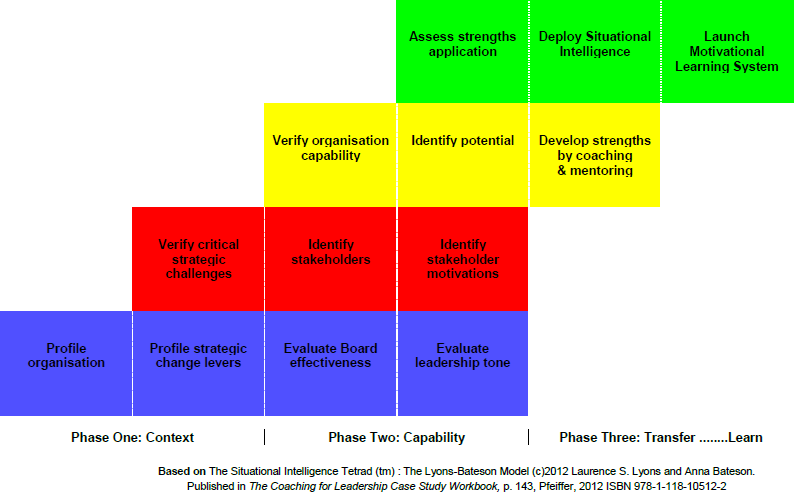
How to plan strategic change?

The turbulent business environment which most organizations inhabit, has impacted the degree to which it is possible to plan strategic change. The pattern of external factors impacting organisations, has become more complex. A more responsive and adaptive approach is required in order to identify these factors and take early advantage of the opportunites to innovate or mitigate threats.

Planning strategic change is most effective when it recognizes and builds on the operational pulse of the organization.

Creating strategic change is about getting fit for an uncertain future, while also ensuring operational stability. Most analysts agree that strategic change derails as a result of inappropriate timing and lack of engagement.

While there is no blueprint for success, there are some tried and tested guidelines for increasing the likelihood of achieving the desired results.

Deciding when to launch new initiatives relies on the ability of business leaders to think strategically:

Scanning the wider world, their market places and their operating environment

– Identifying the pattern of external and internal factors driving their strategic change

– Assessing their stakeholders’ attitudes and expectations

High performing organizations are adopting a participative approach to strategic planning, which surfaces all existing and proposed change initiatives and allows them to be evaluated in the light of strategic imperatives.

Change overload and fatigue are common complaints from Directors. At the same time, new initiatives are championed and obsolete ones are seldom ‘killed.’

Mapping all change initiatives against the business planning cycle, highlights conflicts and interdependencies, while providing an holistic view of the agenda the organization is being asked to embrace. Pinch points become apparent and Director time can be focused on steering multiple initiatives concurrently.

A participative approach to planning, ensures that constructive challenge becomes part of an effective process to determine which initiatives are Mission critical and when they should be launched. A common agenda is created and Directors can begin the process of engaging their stakeholders in the journey.