

It was a pleasure to join a global audience of risk professionals and board members in November. We explored motivational risk and approaches to influencing boards of directors. This article appears in the Winter 2018 edition of Enterprise Risk Magazine: Download Enterprise Risk Winter 18 – Bateson
Board dynamics – a reality check
The sun-drenched weeks of Summer provided me with an opportunity for reading and reflecting. One recurrent theme was underpinned by client approaches from a variety of sectors and territories. Our conversations highlighted the need for realistic expectations, pragmatism and commitment. They went something like this:
‘We need to change the way our Board behaves.’
‘What behaviour would you like to change?’
‘Why do you behave in that way?’
‘Who has noticed the behaviour and its impact?’
‘Who agrees that it needs to change?’
‘Who wants to make it change?’
‘Our board doesn’t share a common philosophy or agenda.’
‘What governance processes do you have in place?’
‘How can you identify individual Board member motivations?’
‘How can you present evidence of differences effectively?’
‘How can you develop Board consensus on the organisation’s purpose, aspirations and beliefs
How can you develop the commitment to change?’
‘We need to do it now because….’
‘What has triggered this urgency?’
‘How much time and effort are you prepared to invest?’
‘How can you build on the existing Board schedule?’
‘How long will it really take?’
‘How can you monitor improvements?’
And the result: Situationally Intelligent programme plans with an increased chance of success.

Board effectiveness is about asking the right questions
Board effectiveness involves asking the right questions. Over the last quarter, my conversations with directors and governance professionals have raised and explored many common themes. It is interesting to note that most are not specific to geography, sector or ownership. It is also true that most of these indicative questions require reflection and thoughtful consideration rather than an instant response.
Board remit. ‘What are we here for?’ ‘Do we agree?’ Do we have a common purpose?’ ‘How do we create value?’ How brave do we feel?’ ‘How far into the future do we want to look?’
Board structure & composition. ‘Are we fit for the future?’ ‘How should we organise ourselves?’
Time. ‘How much time do we need?’ ‘How much time have we got?’ How can we schedule our time together to deliver our remit?
Support. ‘What support do we need?’ ‘Have we invested in our governance team?’ ‘Who should provide external expertise?’ ‘Do we already have this expertise internally?’
Scrutiny. ‘What do our stakeholders expect?’ ‘What standards do we hold ourselves to?’ Who is watching?’ ‘Are we compliant?’ ‘Do we understand how to engage in a digital world?’
Liability. ‘How could we, the board, be affected by our decisions, our actions and the results we achieve?’ ‘How could I be affected?’
Capability. ‘What capability do we need to lead our business now and in the future?’ ‘What contribution could I make?’ ‘What capability do we need to develop?’
Board intelligence. ‘What should we be asking the business?’ What format would help us analyse and synthesise the board intelligence?’ ‘How can we ensure the quality and timeliness of the intelligence presented to us?’ ‘How can we balance our need for concise board papers with a need for comprehensive evidence on which to base our strategic decisions?’
Board dynamics. ‘How should we all behave?’ ‘How do we behave?’ ‘What tone have we created as leaders of the business?’ ‘What environment have we created in the boardroom?’ ‘How well do we listen to others?’ ‘How effective is our strategic decision making?’
Board health. ‘How do we know whether we are healthy?’ ‘What do we think?’ ‘What do others think?’ ‘How do we intend improving our health?’ ‘How will we know if we have made any of those improvements?’ ‘Who will hold us to account?’
Investing in reflection, discussion and synthesis of insights helps to build a common agenda.

Non-Executive Director – insights
Recent discussions with experts and practitioners provide pragmatic advice for clients and candidates:
The opportunity
Client advice:
1. Take succession seriously.
2. Think carefully about what you need to make you ‘fit for the future.’
3. Prepare your role and person specifications thoughtfully – don’t create in your own image.
4. Pick the head-hunter not the firm.
Candidate advice:
1. Establish your personal risk appetite.
2. Get on the radar of the sectors/organisations you are interested in and the people who can open doors – public and third sector advertise but private sector opportunities are not always transparent.
3. Pick carefully – conduct due diligence on the board, chairman and organisation. Identify ownership, board structure, composition, processes and dynamics.
4. Find people to endorse you so that you get through the initial sift.
The selection
Client advice:
1. Schedule search and selection realistically
2. Build on your board rhythm to take advantage of existing events and access to key decision makers.
3. Respect all candidates – they will share their experience.
Candidate advice:
1. Research and prepare properly – currency is important.
2. Position your capability against the specification.
3. Experience board dynamics in action – how do the Chairman and Chief Executive interact?
The transition
Chairman and new NED advice:
1. Tailor on-boarding processes to meet the individual’s need.
2. Ensure meetings with all board members and senior managers before the first formal event.
3. Establish how the new NED can best add value and share insights and expertise.
The price of agility
According to thought leader Dr Laurence Lyons:
‘The price of agility is under-utilisation.’
Agile – Alert – Nimble – Sprightly, highly desirable characteristics. Being agile is the aspirational goal of most business leaders, but it comes at a cost.
How do you resource the need to deliver value to your existing customers with the need to be continuously curious and quick to spot opportunities.
‘How do you factor in the fat which makes you fit?’
Who keeps the wheels on the car? How do you ensure that the business as usual team don’t feel under valued as the development team are commissioned to seek new and novel solutions?
How do you ensure that insights from the people working with your customers reach strategic thinkers and inform their decision making?
How do you create a culture where reflection time is valued, where the time and inclination to innovate are actively encouraged?
And how do you achieve all the above if the message you send is ‘do more with less?’
Developing organisational Situational Intelligence
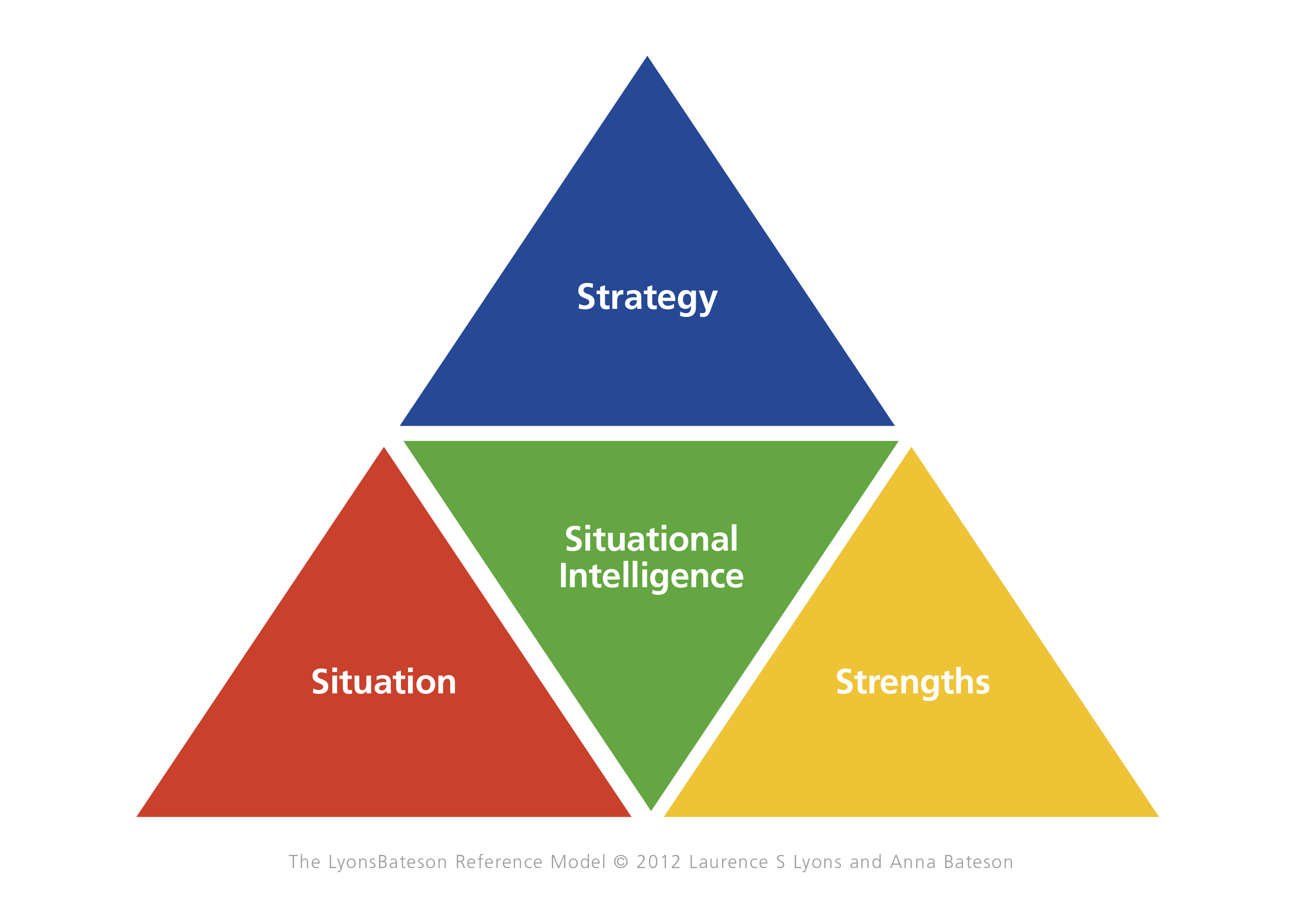
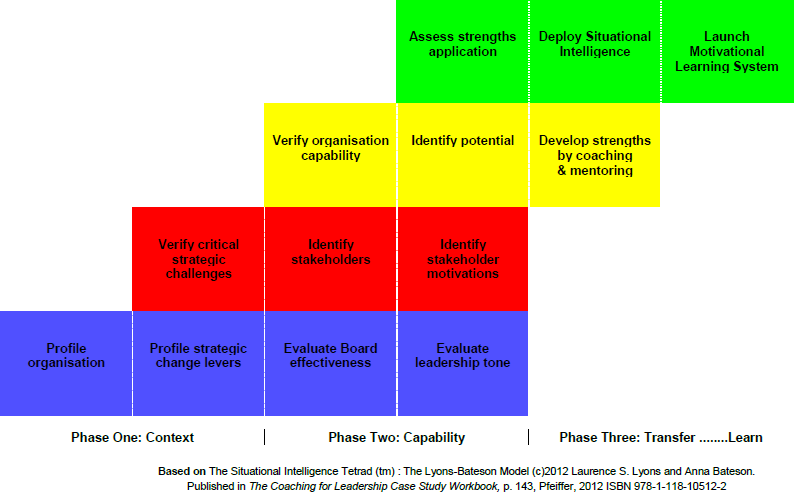
Situational Intelligence is required in order to build organisations that are fit for the future and deliver in the present. This framework, developed in partnership with Dr Laurence Lyons, provides a means of checking whether you have covered all bases.
Board bravery
Board Bravery/Risk Appetite/ Intrapreneurship/Entrepreneurship is largely determined by the nature and composition of the Board and the ownership of the business.
Business leaders answer a hierarchy of questions:
– How brave do we want to be?
– How much are we willing to invest in the new?
– How long before we need to show a return on that investment?
– Who decides how long we have got before we show that return?
Instant, global connectivity and viral messaging have raised the stakes for setting appropriate Risk Appetite levels and taking the right strategic decisions.
Sitting around the Board table, long serving Board members may share sage stories of what happened when brave decisions were taken and things went wrong. A quick review of organizational history may provide a lesson in sacrifice or who fell on their sword and why.
Refreshing the Board may promote or inhibit bravery. The lack of legacy baggage carried by new Board members has the potential to increase risk appetite. Alternatively, new entrants may have been recruited to help steady a ship, out of control.
Each individual director will have a level of natural bravery, determined by the sum of their experiences. Around every Board table, perceptions differ and the richness of debate is essential. Members of a high performance Board will openly share their individual perspectives in order to arrive at a collaborative response to the question of Board bravery.
To quote one experienced headhunter “What some directors regard as breakthrough technology can be described by their colleagues as disruptive technology.”
Coaching for Governance
Check out my chapter on business coaching at board level in:
‘Coaching for Leadership: Writings on Leadership from the World’s Greatest Coaches’.

http://eu.pfeiffer.com/WileyCDA/PfeifferTitle/productCd-0470947748.html
Publication date 1 May. Kindle download available now.
And my collaborative work with Dr Laurence Lyons developing Situational Intelligence, published in:
‘The Coaching for Leadership Case Study Workbook’.
![9781118105122_Lyons_1e[5] (2)](https://cttg.org/wp-content/uploads/2012/04/f93ab-6a00d8351901d953ef01676597557a970b-800wi.jpg "9781118105122_Lyons_1e[5] (2)")
“Beautifully crafted stories, which amuse and deliver the critical messages about effective business coaching. Laurence and Dr Fink provide engaging and valuable messages for busy executives.”
Publication date 1 May.
http://eu.pfeiffer.com/WileyCDA/PfeifferTitle/productCd-1118105125.html
Leading across boundaries
The challenges of engaging with people across geographic, gender and generational boundaries seem to be preoccupying many business leaders. The three key questions my clients ask are:
Is what I want to say going to be heard in the way I intend?
Have I chosen a medium which is appropriate for creating a continuous flow and exchange of insights and ideas?
What brand and reputation am I creating for myself?
Choice of vocabulary is important in establishing common understanding but is not sufficient to ensure that intended messages are heard. The context in which language is used determines meaning. For example ‘Yes’ can have many interpretations.
Yes, I have heard you.
Yes, I see that is your point of view.
Yes, I agree with what you have said.
Yes, I am prepared to help you.
Yes. (Because if I say that you will leave me alone).
Recognising how your words are heard is essential to building dialogue.
The medium we choose is partly determined by our generation. Digital immigrants from the boomer and X generations still refer to ‘mobile’ telephones and seek visual confirmation of the impact of their conversations. Generation Y and Millennials are digital natives. They live in a permanently connected world and chatter continuously with people they have never met.
The technological infrastructure which enables this continuous flow also creates levels of ‘noise’ to which previous business leaders were not subjected . Providing and valuing reflection time has become essential in a world which encourages instant decision making.
In recessionary times, it takes more effort to protect investment in networking opportunities, both virtual and physical. Without these opportunities, the shared insights that lead to the development of new products, services and markets may be delayed or lost.
Personal brand and reputation are created with each conscious and unconscious action. Authenticity and transparency are highly valued in business leaders seeking to build trust across boundaries and attract talent to their organisations. With a clear understanding of your brand values and an understanding of the impact you have on others, you are able to actively manage and reinforce your brand and reputation.
Sources worth checking out include:
Richard D Lewis @ Richard Lewis Communications on geographic/cultural boundaries
Prof. Paul Redmond @ Liverpool University on generational differences.
Lesley Everett @ Walking Tall on personal brand and reputation.
Sentiment
In difficult trading times we are advised to track both the tangible and intangible aspects of our businesses. In tangible terms, a real understanding of money flows is essential. In intangible terms, we follow sentiment. What is the quality of our relationships along our value chains? Are we delivering value to all our stakeholders? Do they want to travel further with us?
Sentiment is viral. It spreads quickly across boundaries. Sentiment impacts our reputation and bottom line. Sentiment is often driven by interest not logic. Sentiment is not static.
How much time is your business devoting to tracking and analysing the impact of stakeholder sentiment on the formulation and delivery of your strategy?
Who is bringing insights on stakeholder sentiment for debate in the boardroom?
Are the messages being filtered or distorted?

Which image do you see?
 Cutting Through the Grey